
Common name: western meadow vole, field mouse
Scientific name: Microtus drummondii (The scientific name for voles, Microtus, means small ear.)
There are four species of meadow voles found in Wisconsin: Western meadow vole (Microtus drummondii), Eastern meadow vole (Microtus pennsylvanicus), prairie vole (Microtus ochrogaster), and woodland vole (Microtus pinetorum). This page is about the most common species in Wisconsin, the western meadow vole.
How to identify voles
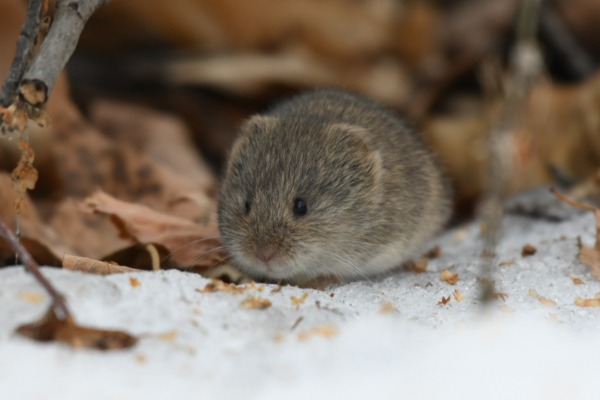
Voles are small. When sitting still, they look like little dark brown balls of fur with black, beady eyes. Their small ears barely stick out from their fur. When they are on the move, they measure 3 to 5 inches long, not counting their short, hairless tails. Their belly fur is grayish. They weigh between 1 and 2 ½ ounces. For comparison, AA batteries weigh about one ounce each.
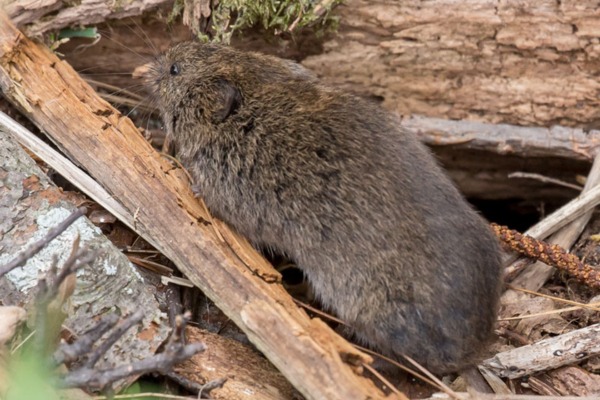
These small rodents can be active at any time of day or night. But, they're usually out at night in the summer and daytime in the winter. If you really want to see one, look in the grass at dusk and dawn.
How to recognize vole tracks
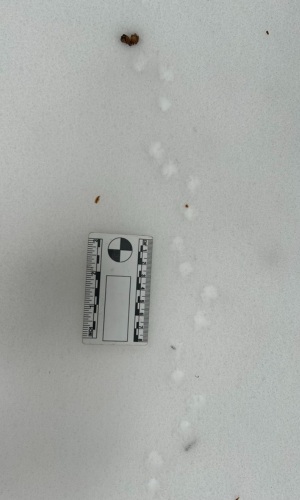
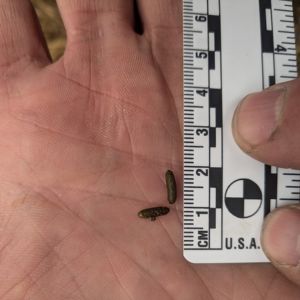
Meadow voles spend most of their time in tunnels under the grass or under the ground. When they come to the surface to find food, they are usually running. In winter, you can find their tiny tracks on top of the snow. Mice hop over the snow, but voles run. Their tracks look a bit like a necklace.
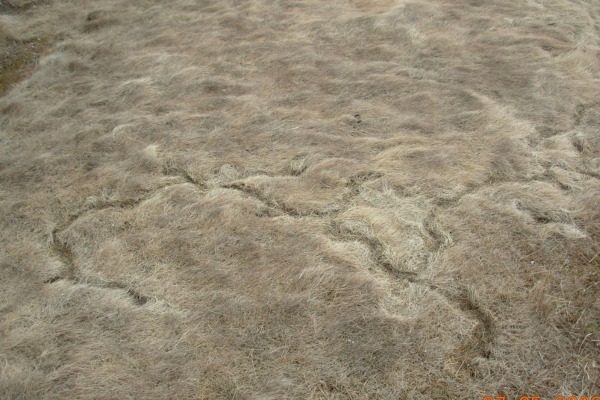
Follow the tracks, and you might find a hole in the snow where they have returned to their tunnel system. They create pathways between entrance and exit holes called "runways." When the snow melts, look for mounds of grass marking their crisscrossing tunnels and nests made of grass.
Where they live
Meadow voles live above ground and in burrows underground. They depend on thick grasses for food, shelter, and protection from predators. You will find them in grassy meadows, grassy marshes, and grassy woodlands. But they can also be found in backyards!
What they eat
Voles eat grasses, sedges, and plants (like clover and other wildflowers) in spring and summer. In fall, they munch on seeds, grains, underground tubers, bulbs, and fruits. If other foods become scarce in winter, they eat the bark of trees and shrubs. They occasionally eat insects, like caterpillars. Voles can also cannibalize their own, especially newborn voles.
Meadow voles can eat almost their entire weight in vegetation every day! Since there can be several hundred voles in one acre, they can be very destructive to crops like hay.
Who eats them
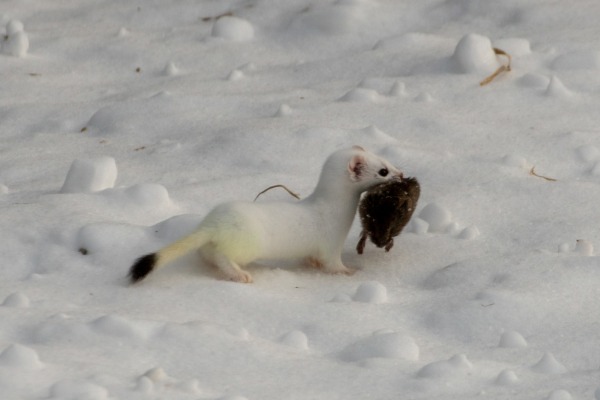
Most meadow voles live about one month. Few survive to see their first birthday. Why? Mainly because there are so many things that eat them. Vole predators include:
- Birds such as hawks, owls, shrikes, gulls, herons, crows
- Carnivores such as foxes, coyotes, opossums, weasels, skunks, dogs, and cats
- Other small mammals such as shrews, chipmunks, and other voles
- Reptiles like snakes and snapping turtles.
- Even fish eat voles! Voles are good swimmers, but larger fish such as muskie and pike catch and eat them while they swim.
How they reproduce
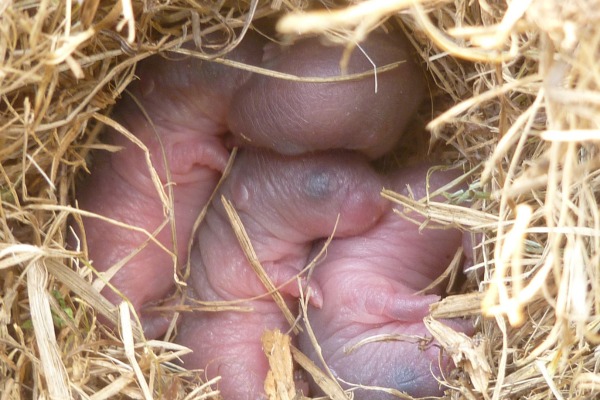
A young female vole can mate when she is only 4 to 6 weeks old. Mother voles give birth after about 21 days. The average litter size is four to six young, but they can have as many as eleven young per litter. Since they can mate year-round except during extreme cold, they could have up to 17 liters in one year, but most only have four to eight litters a year. That is still a lot of baby voles!
Did you know?
In winter, voles live in the subnivean layer. The word “subnivean” comes from the Latin words for under (“sub”) and snow (“nives”). This is a layer that forms under the snow—right on top of the ground. Even when the air above is well below freezing, the subnivean layer can remain right around 32 degrees. Protected from extreme temperatures and wind and out of sight from predators, the voles can create a maze of tunnels to travel from nesting areas to feeding areas.