

Do you know why bobolinks are called upside-down birds?
How to identify a bobolink
The male is black on the head and belly with a yellow-tan patch on the back of the head and neck. It has white stripes along the spine with a large white rump patch and black tail feathers. It is the only North American bird that is dark on the underside and light on top.
The female is light yellow-tan with dark brown eyebrow stripes and thin eye stripes.

You might hear them before you see them. Look for birds fluttering in place singing bubbly courtship songs that sound like “bob-o-link” to some people. This recording was made by mannac near Port Washington. In addition to the bubbling, gurgling bobolink, listen for red-winged blackbirds. What do you think this bird is saying?
Where they live
Bobolinks hang out on weed stalks or fence posts in open fields such as meadows, farmlands, marshes, and prairies. They live in central and northern states during the warmer months but migrate to South America for the winter. You might hear them calling "pink" as they migrate.
What they eat
Bobolinks are omnivores. They eat weed seeds, grains, insects, and spiders. However, they feed their young only protein-rich invertebrates.
Who eats them
Adults are eaten by hawks. Because they nest on the ground, the eggs and flightless young are eaten by skunks, raccoons, foxes, opossums, and other predators.
How they reproduce
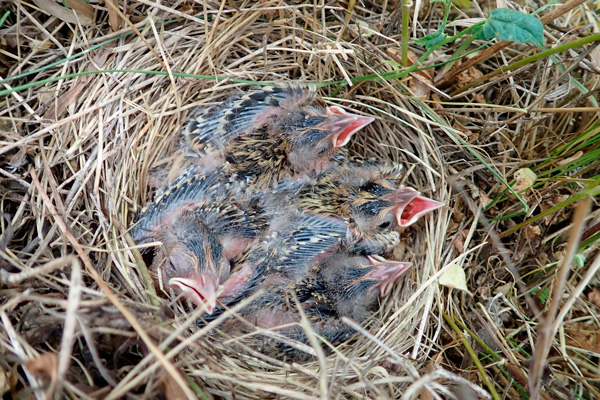
Males migrate to their summer breeding grounds first. They can put on quite a show as they compete for territories. You can watch them sing, fight, and chase each other. Female bobolinks build their nests on the ground by weaving together dried grasses, sedges, and weed stems. They usually lay five or six pale blue-gray to red-brown spotted eggs. In 11 to 14 days, the young hatch. They are helpless--with only a few down feathers to keep them warm.
Did you know?
Except for during the mating season, bobolinks are very social birds, hanging out together in flocks. Each male might mate with several females. Each female might mate with several males and lay eggs from different fathers in the same nest. The male birds help to feed nestlings in several different nests. When the young leave the nest, they join a flock made up of mothers, fathers, siblings, half-siblings, and other birds that nested nearby.
Bobolinks are a Special Concern species in Wisconsin. Bobolink populations are declining as their habitat disappears. When they can’t find prairies, they try to nest in hayfields. Farmers and land managers can help bobolinks by waiting to harvest their hay until the young bobolinks can fly.